Treating Fats, Oils, Grease, and Sludge
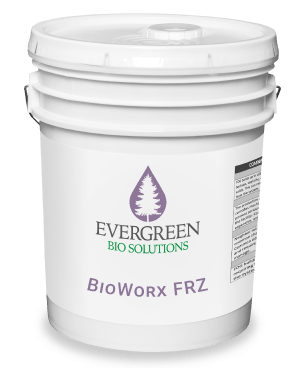
BioWorx FRZ (powder) is a complete, robust product used in a variety of wastewater treatment systems to alleviate challenges associated with fat, oil, and grease (FOG), sludge, odor and hydrogen sulfide (H₂S).
Spored Bacillus strains in this powder are scientifically designed for their ability to maintain treatment in colder environments; water temperatures (< 59°F / 15°C). When added, these naturally occurring bacteria will improve the digestion process that your local bacteria are currently doing.
Common Challenges and BioWorx FRZ Solutions
Fog Accumulation
Challenge: FOG build-up in collection and treatment systems causes backups, septicity, equipment failure, foaming, and floating solids. This can require reactive, costly physical removal from the system.
Solution: BioWorx FRZ improves digestion of FOG, removing it from the system as CO₂. This digestion pro-actively reduces accumulation in the system, reducing labor and capital investment cost.
Sludge Handling and Disposal
Challenge: Whether hauling pressed or liquid sludge to a landfill or for land application, sludge disposal brings a significant cost to facilities. Additionally, excessive sludge yield can reduce systems capacity.
Solution: Improving digestion, settling, and dewatering through bioaugmentation reduces the amount of sludge. By reducing the amount sludge, facilities can lower the amount of money spent on sludge handling and disposal.
Odor Control
Challenge: Neighbor relations, lawsuits, and potential fines are all common challenges faced when dealing with odors. Common odor control equipment and chemistry are costly and require specialized equipment and labor to manage.
Solution: BioWorx FRZ prevents the formation of biological acids and other odorous compounds, reducing the potential for complaints and lawsuits without costly chemicals or equipment.
Hydrogen Sulfide (H₂S)
Challenge: The production of hydrogen sulfide causes complaints, corrodes mechanical and electrical components, and possess serious safety risk for operators and those around the facility. Conventional treatment is non-preventative, expensive, and capital intensive.
Solution: Preventative. Inhibition of bacteria responsible for the formation of H₂S reduces and/or eliminates complaints, corrosion, and safety risk. This prevents the need for conventional treatment.
Applications
- Lagoons
- Aeration Basins
- Force Mains
- Grease Interceptors
- Lift Stations
- Activated Slude Systems
Metabolism Methods
- Aerobic
- Anoxic
- Anaerobic